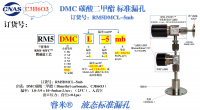
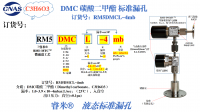
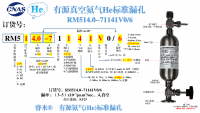
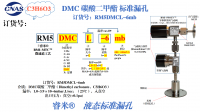
上海睿米仪器仪表有限公司
地 址:上海.浦东.航头镇.乐城路30弄4号(201317)
电 话:021-58220307
传 真:021-68539811
邮 箱:contact@realmeter.cn
联系人:13601764364(谢先生)
网 址:www.realmeter.cn


—从饱和蒸气压的底层物理到质量法(直接法)计量,再到 RGA 定量放气与 Fab 风险预算的工程闭环
半导体制造中,材料放气(Outgassing)与有机污染(Organic Contamination)长期存在一个核心矛盾:RGA 能“看见”有机峰,却难以给出“可溯源、可跨实验室对齐”的有机放气通量。 传统标准(如 ASTM E595)提供了宏观指标(TML/CVCM),而 SEMI F 系列更偏工程规范边界, 二者都难以直接回答“在真实真空与工艺窗口里,材料释放的重烃污染负载是否超出工艺裕量”。
本文系统论证:采用十二烷(n-Dodecane, C12H26)作为半导体真空系统中的重烃代表分子(HHC proxy),通过基于饱和蒸气压的稳定通量源结构形成可重复放气, 并使用质量法(Gravimetric Method)进行第三方计量(直接法/基准法), 可将 RGA 从“定性诊断工具”升级为“定量计量工具”,从而实现材料放气数据的工程可比、 跨系统对齐与工艺风险定量。
在先进制程(尤其光刻/高真空腔体/极高洁净系统)里,放气问题常表现为 RGA 背景中 CxHy 相关峰抬升、 抽空后衰减缓慢、关键表面出现有机沉积或吸附层增长、维护后背景出现不可预期漂移等。 但现实是:不同腔体、不同离子源、不同采样位置、不同灵敏度与分辨率条件下, 同一材料可能给出完全不同的峰值强度。
关键缺口:RGA 的“峰值强弱”很难直接变成可比较、可预算、可追责的“真实放气通量”。 Fab 需要一个“已知、稳定、可溯源”的有机放气基准源,把信号强度与真实通量对应起来。
灵敏度提升并不会自动解决定量问题:RGA 的读数仍受仪器状态(离子源、四极杆透过率)、系统几何(采样位置、抽速分配)、 背景与基线漂移等影响。没有标准源时,RGA 更像“诊断仪”而不是“计量仪”: 能告诉你“变化了”,却难告诉你“变化了多少”以及“跨系统是否一致”。
十二烷在此并非燃料语义,而是被用作重碳氢化合物(Heavy Hydrocarbon, HHC)代表分子: 重、难抽、易积累、易沉积,且对光刻等关键工艺窗口极为敏感。 其工程目标不是“复刻所有真实放气组分”,而是提供一个最坏情形(Worst-case)污染标尺: 若材料放气达到“等效十二烷通量 X”,工艺是否仍在安全裕量内?
真空腔体材料:聚合物密封件(O-ring)、胶粘剂、涂层、线缆与绝缘材料等;
清洗/装配残留:挥发性有机物(VOCs)及更重的碳氢链残留;
运输与存储:包装材料迁移与吸附再释放;
设备维护后背景上升:与有机薄膜/吸附层再平衡相关。
当纯液体十二烷在恒定温度 T 下与蒸气相共存,液相–气相界面满足:
其中 (P_{mathrm{sat}}(T)) 为十二烷在温度 T 的饱和蒸气压(物性常数)。 此时“源项”由温度决定,而非由外部供气系统、阀门开度或操作员设定决定。 因此只要温控稳定,驱动力就稳定。
将饱和蒸气空间通过微通道连接到真空腔体,微通道的作用是:限定几何通导,使得向腔体输出一个稳定通量。 对“标准源”而言,这种设计的关键优势是把系统主要不确定度压缩到:
温度稳定性(决定 (P_{mathrm{sat}}));
通道几何与材料稳定性(决定通导随时间漂移的程度);
外部真空条件对输出通量的二阶影响(可通过工况定义与验证控制)。
“标准”最怕三种漂移:驱动力漂移、结构漂移、状态漂移。饱和蒸气压结构将驱动力绑定到物性与温度; 微通道结构可通过材料与工艺提高机械可靠性与抗冲击能力,从而降低结构漂移; 状态漂移则通过定义温度、稳态时间、腔体抽速条件来压制。 因此这种路线本质是把问题降维到“温度 + 几何 + 工况”,更接近可工程化与可溯源的标准体系。
质量法的核心表达式只有一行:
它直接基于 SI 基本量:质量(kg)与时间(s),因此具备“基准方法”的典型特征:不依赖参考漏孔、不依赖检漏仪示值线性假设、不依赖把液体硬等效成气体的模型链条。 对液体介质而言,这种“底层逻辑成立”的直接法,是把“液体标准漏孔”从工程手段推进到计量学语义的关键一步。
工程上常见两种表达:
年泄漏量(g/a):对液体最直观,便于做污染负载预算;
漏率(mbar·L/s 或 Pa·m³/s):真空行业常用,便于与抽速/通导计算体系对接。
关键是:质量法得到 (dot m) 后,换算到 mbar·L/s 只是为了行业语言对齐;计量本体仍然是 Δm/Δt。 因此建议在 Fab 文件中同时保留 g/a 与 mbar·L/s(或 Pa·m³/s),并明确温度条件与不确定度(k=2)。
| 方法 | 是否依赖模型 | 是否依赖参考件 | SI 直接溯源 | 典型用途 |
|---|---|---|---|---|
| 质量法(Gravimetric) | 最低(仅需基本修正项) | 否 | 是(kg、s) | 液体通量基准、标准建立 |
| 相对比较法 | 中 | 是 | 间接 | 工程快速校准、转移标准 |
| 气体等效法 | 高(液→气的等效链条) | 可选 | 间接 | 工程兼容性、历史体系对接 |
RGA 的信号受离子源状态、透过率、采样位置、抽速分配、背景基线等影响。 因此定量的第一步不是“更灵敏”,而是“更可对齐”: 引入已知通量的十二烷标准漏孔作为输入,记录稳定段的特征 m/z 信号, 建立映射函数(线性或分段线性/拟合):
其中 (S_{m/z}) 为选定质量数的稳态信号(或积分信号),(dot m_{mathrm{C12}}) 为证书给定的十二烷通量。
工程实践中锚点选择遵循三条原则:信号强(SNR 高)、干扰少(与常见背景气体不重叠或可分离)、对 HHC 具有代表性。 因此常选 2–3 个锚点形成冗余(例如 57/71/85),并对锚点间一致性做健康检查: 若某锚点受干扰(背景谱变化),可用其他锚点交叉验证。
通过标准漏孔完成标定后,材料测试阶段可输出“等效十二烷通量”随时间/温度的曲线, 从而支持:材料排序、批次一致性评估、工艺窗口风险预算与跨实验室对齐。
Fab 的关键问题往往是预算问题:某模块允许的有机负载上限是多少?某材料在特定温度谱下的累积负载是多少? 用“等效十二烷通量”即可把 RGA 结果转成可预算语言(例如 g/a、mg/day),并可进一步做积分得到累积负载。 这使得放气评估从“经验判断”升级为“工程决策”。
没有标准源时,两套 RGA 系统很难仅凭“同型号仪器”获得一致的通量结论; 有了标准源后,就可以把差异压缩到可管理范围: (1)先对齐系统响应;(2)再比较材料。 这也是“标准漏孔进入材料放气体系”的核心意义:让结果可比、可复现、可审计。
ASTM E595 的 TML/CVCM 对材料宏观挥发性筛选很有效,但输出是宏观比例指标(%),难直接映射到真空腔体中的动态污染负载、 也难直接对应 RGA 信号强度。因此在半导体语境下,它更适合“合格性筛选层”,而不是“工艺风险定量层”。
SEMI F 系列更偏工程规范与边界条件(洁净、材料选择、接口等)。它约束“不要产生不可接受污染”, 但通常并不提供“有机通量基准分子”“RGA 定量映射”“跨实验室对齐基准源”等方法学定义。 因此 SEMI F 更多承担“工程一致性边界层”的角色。
| 层级 | 工具/标准 | 输出 | 解决的问题 |
|---|---|---|---|
| 材料筛选层 | ASTM E595 | TML/CVCM(%) | 宏观合格性筛选 |
| 工程边界层 | SEMI F(及内部规范) | 合规/洁净要求 | 工程一致性与约束 |
| 工艺定量层 | 十二烷标准漏孔 + RGA 定量 | 等效十二烷通量(g/a, mbar·L/s) | 工艺相关风险预算与对齐 |
材料初筛:ASTM E595(或内部等效流程)完成宏观挥发性/可凝结物筛选;
工程规范:按 SEMI F / 内部洁净规范做材料与装配合规审查;
关键材料定量:使用十二烷标准漏孔对 RGA 系统标定,按温度谱/时间谱对材料进行放气测试;
输出与对齐:输出“等效十二烷通量曲线 + 关键窗口稳态通量 + 累积负载”,用于材料排序与风险预算。
标准源要求:十二烷标准漏孔需提供第三方质量法校准证书,包含 g/a 与(可选)mbar·L/s、校准温度、扩展不确定度(k=2)。
标定频次:离子源更换、腔体大修、采样位置变更或背景谱显著变化后必须复标;常规建议按周期复标并留档。
锚点策略:至少选择 2–3 个 m/z 锚点并做一致性检查;必要时建立背景干扰判别规则。
数据输出:必须同时输出原始 RGA 曲线、换算后的等效十二烷通量曲线、关键窗口统计量与不确定度/重复性评估。
当十二烷标准漏孔具备(1)饱和蒸气压驱动的稳定源特性,(2)微通道几何限定的可重复通量,(3)质量法第三方校准的直接法计量基础, 并被用于半导体材料放气分析的 RGA 定量标定时,它所代表的就不再是“一个检漏附件”,而是:
半导体材料放气分析从“看得见”到“算得清”、从“经验判断”到“工程可对齐”的关键计量基础设施。
—From saturated vapor-pressure physics to gravimetric (primary/direct) metrology, and to quantitative RGA outgassing with Fab-ready risk budgeting
3. First-principles physics: saturated vapor pressure + geometric restriction = stable flux
4. Metrology fundamentals: gravimetric method as a primary/direct method
5. Making RGA quantitative: mapping, anchors, and closed-loop workflow
6. Engineering deployment: from peaks to flux budgeting and cross-lab alignment
8. Recommended SOP, acceptance criteria, and implementation notes
In semiconductor manufacturing, material outgassing and organic contamination create a persistent gap between what is observable and what is actionable:RGA can “see peaks,” but it is difficult to report an organic outgassing flux that is traceable and comparable across tools and labs.Industry standards provide partial coverage: ASTM E595 gives macroscopic screening metrics (TML/CVCM), while SEMI F-series primarily defines engineering boundaries and cleanliness expectations. However, neither framework alone directly answers the Fab question: “Under real vacuum and process windows, does the heavy-hydrocarbon (HHC) load exceed the process margin?”
This paper proposes and justifies a Fab-ready quantitative framework using n-dodecane (C12H26) as an HHC proxy. A saturated vapor-pressure driven source combined with geometric flow restriction forms a stable organic flux, while third-party gravimetric calibration (Gravimetric Method; primary/direct) anchors the flux to SI units (mass and time) with an explicit uncertainty model. This allows RGA to be upgraded from a qualitative diagnostic tool to a quantitative metrology tool, enabling cross-system alignment, material ranking, and process-relevant risk budgeting.
In advanced manufacturing—especially lithography and high-/ultra-high-vacuum subsystems—outgassing often appears as an HHC background that rises over time, decays slowly after pump-down, and varies unpredictably after maintenance. RGA provides rich spectral information, but peak heights are strongly affected by: ion source condition, quadrupole transmission, sampling location, effective pumping speed distribution, and baseline drift. Thus, “peak intensity” is not a stable engineering metric across different chambers, tools, or labs.
Core gap: without a calibrated organic source, RGA data remain hard to convert into a traceable, comparable flux (mass/time or mol/time). Fabs need a stable, known, and auditable organic flux reference to map signal intensity to real outgassing load.
Improving sensitivity increases detectability but not comparability. Even a very sensitive RGA may disagree with another RGA if response factors and system geometry differ. Quantification requires a reference input with known flux under defined conditions, so that each system can be “aligned” before materials are compared.
In this context, n-dodecane is not chosen as “the only true outgassing species.” It is used as an engineering proxy for heavy hydrocarbons (HHC): heavier molecules are harder to pump, tend to accumulate, and are more prone to adsorption/condensation on critical surfaces. For risk analysis, the key question is: if a material releases an HHC load equivalent to a known n-dodecane flux, is the process still within margin?
Polymers and seals (O-rings), adhesives, coatings, cable/insulation materials in vacuum environments;
Assembly/cleaning residues and VOC-to-HHC tail distributions;
Packaging migration and adsorption/desorption during storage and transport;
Post-maintenance background shifts due to re-equilibration of adsorbed films.
For a pure liquid in equilibrium with its vapor at a controlled temperature T, the vapor phase pressure is fixed by the saturated vapor pressure:
Because (P_{mathrm{sat}}(T)) is a thermophysical property, the “source condition” becomes temperature-determined rather than valve-determined. With stable thermal control, the driving condition is stable and repeatable.
Coupling the saturated vapor space to a vacuum chamber through a microchannel does not change the physics of the source; it only defines a geometric restriction that yields a stable flux into the chamber. For a standard source, this is desirable because it compresses dominant uncertainty contributors to: temperature stability, channel geometry stability, and defined external pumping conditions.
A standard source must resist three drifts: driving-condition drift, structural drift, and state drift. A saturated vapor-pressure source binds the driving condition to temperature and material properties; a mechanically robust microchannel design reduces structural drift; state drift is controlled by defining temperature setpoints, stabilization time, and chamber pumping configuration. Thus, the system is reduced to manageable variables (T + geometry + defined boundary conditions), making it practical for metrology-grade deployment.
The gravimetric method measures liquid flux directly by mass loss over time:
This method is anchored to SI base quantities: mass (kg) and time (s). Critically, it does not rely on: a reference leak artifact, detector indication linearity, or a “liquid-to-gas equivalence model chain”. Therefore, for liquid-based calibrated leaks, gravimetry is a textbook example of a primary/direct method.
Practically, two representations are used:
Mass loss rate (e.g., g/a, mg/day): intuitive for contamination budgeting;
Vacuum-industry leak units (mbar·L/s or Pa·m³/s): compatible with pumping-speed and conductance calculations.
The key principle is: the primary measurement is (Delta m/Delta t). Conversions to mbar·L/s exist for interoperability, but they are not the metrological “root.” Reports should always state temperature, boundary conditions, and expanded uncertainty (k=2).
| Approach | Model dependence | Needs reference artifact | Direct SI traceability | Typical role |
|---|---|---|---|---|
| Gravimetric (primary/direct) | Low | No | Yes (kg, s) | Primary liquid flux metrology; standard establishment |
| Relative comparison | Medium | Yes | Indirect | Engineering transfer; quick verification |
| Gas-equivalent | High | Optional | Indirect | Compatibility with legacy gas-based calibration frameworks |
RGA signals are affected by instrument state and system geometry. Quantification therefore starts by injecting a known organic flux. Using the gravimetrically calibrated n-dodecane leak as the input, record stabilized signals of selected m/z channels and build a mapping:
The mapping can be linear (often sufficient in a well-behaved range) or piecewise/fit-based depending on detector regime and background conditions.
Anchor selection favors high SNR, low interference, and representativeness for HHC risk. Common anchors include m/z 57, 71, 85 (fragment families typical for heavier hydrocarbons). Best practice is to select 2–3 anchors and enforce consistency checks; if one channel is perturbed by background shifts, others provide cross-validation.
Once mapped, material tests (time/temperature programs) can be converted into equivalent n-dodecane flux vs time/temperature, supporting material ranking, batch control, and process margin analysis.
Fab decisions are often budget decisions: allowable organic load, maintenance cycles, and accumulation rates. Using equivalent n-dodecane flux (e.g., g/a or mg/day) enables consistent budgeting and integration to cumulative load, which can be connected to pumping capacity and contamination risk thresholds.
Without a calibrated source, comparing materials across RGAs is dominated by response-factor differences. With a calibrated source, differences are reduced to manageable, auditable components: first align system response, then compare materials. This is why a calibrated leak becomes infrastructure rather than “an accessory.”
ASTM E595 outputs macroscopic ratios (TML/CVCM) that are excellent for screening. However, they do not directly provide dynamic flux under Fab vacuum boundary conditions, nor do they map directly to RGA intensity or time-dependent accumulation. Thus, in semiconductor contexts, ASTM E595 is best viewed as a screening/qualification layer.
SEMI F-series defines engineering boundaries and cleanliness expectations but typically does not define an organic flux proxy molecule, a quantitative RGA mapping method, or a cross-lab alignment artifact. It therefore acts as the engineering boundary layer.
| Layer | Standard/tool | Output | What it solves |
|---|---|---|---|
| Screening layer | ASTM E595 | TML/CVCM (%) | Macroscopic material screening |
| Engineering boundary layer | SEMI F (and internal specs) | Compliance/cleanliness requirements | Engineering consistency and constraints |
| Process-quantitative layer | n-Dodecane calibrated leak + quantitative RGA | Equivalent n-dodecane flux (g/a, mbar·L/s) | Process-relevant risk budgeting and cross-lab alignment |
Screening: ASTM E595 (or internal equivalent) for macroscopic volatility/condensables.
Engineering compliance: SEMI F / internal cleanliness and material selection requirements.
Key-material quantification: calibrate RGA response using the gravimetrically calibrated n-dodecane leak; run time/temperature outgassing programs for materials.
Output & alignment: report raw RGA curves + converted equivalent n-dodecane flux curves + steady-window statistics + repeatability/uncertainty notes.
Reference artifact: require a third-party gravimetric calibration certificate including g/a (and optional mbar·L/s), calibration temperature, and expanded uncertainty (k=2).
Re-calibration triggers: ion source replacement, major chamber maintenance, sampling geometry changes, or significant background shifts.
Anchor strategy: choose ≥2–3 m/z anchors and enforce consistency checks; define interference rules if needed.
Deliverables: provide both raw spectra/time series and converted flux curves; document boundary conditions and repeatability.
When a liquid calibrated leak is built on saturated vapor-pressure physics, stabilized by robust geometric restriction, and calibrated via gravimetry with explicit uncertainty, it becomes more than a leak-testing component. In semiconductor material outgassing analysis, it functions as metrological infrastructure that enables: traceable quantitative RGA, cross-lab alignment, and process-relevant organic contamination budgeting.