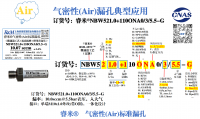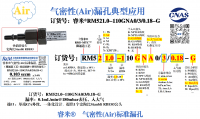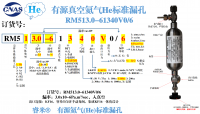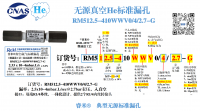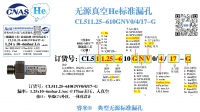
产品实物图(点击放大)
Product Image (Click to Zoom)
正十二烷(n-C₁₂H₂₆)RGA 标准漏孔组件实物图。
Actual configuration of the n-dodecane (n-C₁₂H₂₆) RGA standard leak assembly.

目录
Table of Contents
Fab-friendly language mode: display one language at a time. Printing produces a clean PDF layout (no mixed CN/EN paragraphs).
Document Control / 文档控制
| Document Title | n-Dodecane Standard Leak White Paper |
|---|---|
| Company | RealMeter (睿米) |
| Version | V1.0 |
| Release Status | Official Release |
| Release Date | 2025-12 |
Recommended use as a verification checklist, not as an absolute specification.
建议作为验证清单使用,而非绝对规格定义。
| C14 / C16 Extension Note | Same methodology, shifted high-mass anchors (e.g., n-C14H30, n-C16H34). |
| 十四烷 / 十六烷扩展说明 | 方法论一致,仅高质量数锚点随分子量上移。 |
Revision History / 修订记录
| Version | Date | Description |
|---|---|---|
| V1.0 | 2025-12 | Initial official release with integrated LHC / HHC RGA methodology and fab-audit FAQ. |
Scope / Intended Use / Disclaimer
Scope
本文档适用于半导体制造、光刻设备、真空系统及相关 RGA 分析场景,用于说明正十二烷(n-C₁₂H₂₆)标准漏孔在 LHC / HHC 有机污染分析中的工程应用方法。
This document applies to semiconductor manufacturing, lithography tools, vacuum systems, and RGA-based contamination analysis, describing engineering use of an n-dodecane (n-C₁₂H₂₆) standard leak for LHC/HHC methodologies.
Intended Use
本白皮书仅用于工程诊断、设备评估、方法学建立及技术审核参考,不构成任何工艺窗口定义、产品规格或性能保证。
This white paper is intended for engineering diagnostics, tool evaluation, methodology development, and technical audits only. It does not define process windows or guarantee product specifications/performance.
Disclaimer
文中所述方法基于典型应用场景,不同设备、工艺条件及使用环境下结果可能存在差异。睿米不对因直接使用本文档信息而产生的任何工艺或产线风险承担责任。
Methods and conclusions are based on typical use cases; results may vary with system configuration and process conditions. RealMeter assumes no liability for risks arising from direct application of the information herein.
摘要(Executive Summary)
Executive Summary
随着半导体工艺节点持续推进及光刻技术复杂度不断提升,真空系统中重有机污染物(Heavy Hydrocarbon, HHC)对工艺稳定性、设备一致性和产品良率的影响日益显著。行业普遍认识到有机污染风险的存在,但长期以来,RGA 在高质量数区对重烃行为的分析缺乏统一、可量化的工程参考。
睿米推出的正十二烷(n-C₁₂H₂₆)标准漏孔,为半导体行业提供了一种工程可控、结果可复现、具备溯源潜力的重烃标准源,使 RGA 在高质量数区的分析首次具备工程化与审核级应用条件。
As semiconductor technology nodes continue to scale and lithography processes grow in complexity, the impact of heavy hydrocarbon (HHC) contamination in vacuum systems on process stability, equipment consistency, and yield has become increasingly significant. Historically, RGA analysis in the high-mass region has lacked a unified and quantitative engineering reference.
The n-dodecane (n-C₁₂H₂₆) standard leak introduced by RealMeter provides an engineering-grade heavy hydrocarbon reference that is controllable and repeatable, enabling high-mass RGA analysis to transition from qualitative observation to audit-ready engineering practice.
1. 行业背景与技术挑战
1. Industry Background and Technical Challenges
1.1 半导体真空系统中的重有机污染
1.1 Heavy organic contamination in vacuum systems
在半导体制造与光刻相关工艺中,真空系统内除常规轻气体外,还广泛存在来源复杂的重有机污染物,主要包括:真空泵油及润滑介质的返蒸、光刻胶/溶剂在工艺或维护过程中的裂解残留、腔体材料/密封件及辅助部件的有机释气。此类污染物通常具有分子量高、蒸气压低、抽速慢、易吸附并产生记忆效应等特征,对先进工艺窗口构成长期、隐性的系统性风险。
In semiconductor manufacturing and lithography, vacuum systems contain organic contaminants sourced from pump oil backstreaming, process/maintenance decomposition residues, and outgassing from chamber materials and seals. These species often have high molecular weight, low vapor pressure, slow effective pumping, strong adsorption, and memory effects—posing long-term systemic risks to advanced process windows.
1.2 传统 RGA 分析的局限
1.2 Limitations of conventional RGA practices
在正十二烷标准漏孔引入之前,RGA 校准与分析主要集中于低质量数区(如 H₂、N₂、Ar、CO₂),而对 >100 amu 区域的重烃信号多停留在趋势观察层面。其结果是:重有机污染可被观测,但难以定量;不同设备、不同时间、不同 Fab 之间缺乏可比性;相关判断高度依赖经验,难以形成审核级工程证据。
Before heavy hydrocarbon standards were available, RGA calibration typically focused on low-mass gases (H₂, N₂, Ar, CO₂), while signals above 100 amu were mainly used for trending. As a result, contamination could be observed but not quantified, comparisons across tools/time/fabs were weak, and conclusions relied heavily on experience rather than audit-grade evidence.
2. 正十二烷作为重烃标准分子的工程依据
2. Engineering rationale for selecting n-dodecane
2.1 分子代表性
2.1 Molecular representativeness
正十二烷是一种典型长链饱和烷烃,分子量为 170 amu,其化学结构和裂解行为能够有效代表真空系统中常见的油类及有机材料裂解产生的重端碳氢组分。
n-Dodecane is a linear saturated hydrocarbon (170 amu). Its structure and fragmentation behavior make it a practical proxy for heavy fractions from pump oils and decomposed organics commonly observed in vacuum systems.
2.2 工程可控性
2.2 Engineering controllability
相较于更轻的烃类分子,正十二烷具备足够的污染代表性;相较于更重的烃类(如正十四烷、正十六烷),其在常温条件下仍具有可控的蒸发特性,能够在工程上实现稳定、可重复的通量输出。睿米认为,正十二烷在代表性、稳定性与可复现性之间形成了当前阶段最优的工程平衡,因此适合作为重烃分析的基础标准分子。
Compared with lighter hydrocarbons, n-dodecane provides stronger representativeness of heavy organics; compared with heavier species (e.g., n-tetradecane, n-hexadecane), it retains controllable evaporation at ambient conditions—supporting stable, repeatable output. RealMeter considers it an optimal engineering balance of representativeness, stability, and reproducibility for baseline HHC reference.
2.3 RGA 适配性
2.3 RGA compatibility
正十二烷的质量范围位于主流工业级 RGA 的有效检测区间内,可在不引入额外系统复杂性的前提下,实现高质量数区的稳定检测与校准。
Its mass range lies within the effective detection window of mainstream industrial RGAs, enabling stable high-mass verification without adding system complexity.
3. 正十二烷标准漏孔的技术实现原则
3. Technical implementation principles
正十二烷标准漏孔基于精密微通道结构与低死体积阀控设计,实现:已知且稳定的等效漏率输出;可控开启与关闭,避免对系统造成不可预测影响;与半导体真空系统和 RGA 的工程兼容性。其设计目标并非模拟污染事件本身,而是提供一种可管理、可量化的诊断源,用于评估系统对重有机物的响应能力。
The standard leak is implemented using precision micro-channel structures and low-dead-volume valve control to deliver a known and stable equivalent leak rate with controllable open/close behavior and tool compatibility. It is intended as a managed, quantifiable diagnostic source, not a simulation of contamination events.
4. 主要应用场景与工程价值
4. Application scenarios and engineering value
4.1 半导体制造与光刻
4.1 Semiconductor manufacturing and lithography
RGA 高质量数区灵敏度与一致性校准
真空系统重有机污染定量评估
泵返油、材料释气及记忆效应的工程诊断
Tool Qualification 与 Fab 技术审核支撑
High-mass RGA sensitivity and consistency verification
Quantitative assessment of heavy organic contamination
Engineering diagnostics for oil backstreaming, outgassing, and memory effects
Support for tool qualification and fab audits
4.2 RGA 与质谱仪设备
4.2 RGA / mass spectrometer equipment
出厂性能验证与一致性测试
高 m/z 区性能评估
仪器维护与再标定
Factory acceptance and consistency tests
High m/z performance evaluation
Maintenance and re-verification
4.3 高端真空工程与计量
4.3 Advanced vacuum engineering & metrology
重分子抽速与滞留特性评估
重烃分析的溯源与对标
Assessment of heavy-molecule pumping and residence behavior
Traceable comparison for high-mass organic analysis
5. 行业方法论意义
5. Methodological significance
正十二烷标准漏孔的推出,使重有机污染分析首次具备:可量化(由趋势判断转向工程量化)、可复现(跨设备、跨时间一致性验证)、可审核(为 Fab 与第三方审核提供明确依据)。睿米认为,这一转变不仅是一项产品创新,更是半导体 RGA 应用方法论的重要补充。
The n-dodecane standard leak enables heavy organic analysis to become quantifiable, repeatable, and auditable—providing a concrete basis for tool-to-tool comparison and fab/third-party audits. This represents a meaningful methodological extension for semiconductor RGA practices.
6. LHC vs. HHC 的官方级对比说明
6. Official Comparison: LHC vs. HHC
轻质碳氢化合物(LHC)与重质碳氢化合物(HHC)代表两类在物理行为、时间尺度及工程意义上均显著不同的有机物体系,在基于 RGA 的诊断中承担不同但互补的角色。
LHC(约 m/z 12–50)蒸气压高、抽速快、表面滞留短、记忆效应弱,适合用于过程相关的瞬态有机行为监测。HHC(通常 >100 amu)蒸气压低、易吸附、解吸慢、记忆效应显著,反映真空系统的长期有机污染状态。
从方法论角度看,LHC 分析以事件驱动、时间分辨为主,而HHC 分析以状态驱动、历史相关为主。既有轻烃气体校准实践可支撑 LHC 功能性监测;而 HHC 的等价定量参考长期缺失。正十二烷标准漏孔并非替代 LHC 校准,而是补齐高质量数区的工程参考。
概括而言:LHC 校准用于验证 RGA“是否正常工作”,而 HHC 标准用于评估真空系统“是否在长期内保持可控状态”。
Light hydrocarbons (LHC) and heavy hydrocarbons (HHC) represent two distinct classes of organics in semiconductor vacuum systems, differing fundamentally in physical behavior, time scale, and engineering meaning. Accordingly, they play complementary roles in RGA-based diagnostics.
LHC typically refer to low–molecular-weight hydrocarbons (approximately m/z 12–50). They exhibit relatively high vapor pressure, fast effective pumping, short surface residence times, and minimal memory effects. Therefore, LHC signals are well suited for time-resolved, event-driven monitoring of process-related organic activity (e.g., transient outgassing or decomposition signatures).
HHC, by contrast, generally refer to higher–molecular-weight organic species (typically >100 amu). They are characterized by low vapor pressure, stronger adsorption, slower desorption kinetics, and pronounced memory effects. As a result, HHC signals reflect the long-term contamination state of a vacuum system, including accumulated residues and backstreaming-related heavy fractions.
From a methodology perspective, LHC analysis is primarily event-driven and time-resolved, while HHC analysis is state-driven and history-dependent. Established calibration practices using light hydrocarbon gases support LHC monitoring; however, equivalent quantitative reference standards for HHC have historically been limited. The n-dodecane standard leak is intended to extend audit-ready engineering reference into the high-mass regime, complementing—rather than replacing—LHC calibration.
In summary: LHC calibration verifies that the RGA responds correctly; HHC verification evaluates whether the vacuum system remains under control over time.
7. LHC + HHC 联合 RGA 校准策略(工程流程)
7. Combined LHC + HHC RGA Calibration Strategy (Engineering Workflow)
为实现对真空系统有机污染行为的完整评估,建议采用 LHC 与 HHC 相结合的分层校准与诊断策略:
基础功能校准(无机气体):使用 H₂、N₂、Ar、CO₂ 等验证基本灵敏度与质量响应。
LHC 校准(轻烃):采用 CH₄、C₂H₄、C₃H₈ 等验证电离响应、质量歧视与瞬态响应。
过程监测(LHC 主导):用于实时追踪过程诱发的有机事件。
HHC 参考验证(正十二烷标准漏孔):评估高质量数区灵敏度、一致性及系统记忆效应响应。
长期趋势与审核支撑(HHC 主导):用于长期洁净度趋势与审核文档。
该策略明确区分“仪器功能验证”与“系统状态评估”的边界,为 Tool Qualification 与跨设备对比提供工程一致性基础。
To achieve a complete evaluation of organic behavior in vacuum systems, a layered strategy combining LHC and HHC calibration and diagnostics is recommended:
Baseline functional calibration (inorganic gases): verify core sensitivity and mass response using H₂, N₂, Ar, and CO₂.
LHC calibration (light hydrocarbons): validate ionization response, mass discrimination, and transient behavior using CH₄, C₂H₄, and C₃H₈ (or equivalent standards).
Process monitoring (LHC-dominated): track process-induced transient organic events in real time for operational diagnostics.
HHC reference verification (n-dodecane standard leak): verify high-mass sensitivity, consistency, and system memory-effect response in the HHC regime.
Long-term trending and audit support (HHC-dominated): use HHC signals for long-term cleanliness trending and to produce audit-ready documentation.
This workflow explicitly separates instrument functionality verification (does the RGA respond correctly?) from system state assessment (does the vacuum system remain under control over time?), thereby supporting tool qualification and cross-tool comparability in fab environments.
X. 正十二烷在 RGA 中的典型电离碎裂与推荐操作条件(INFICON XPR3+ 直连腔体)
X. Typical EI Fragmentation and Recommended Operating Conditions for n-Dodecane (INFICON XPR3+ Direct-to-Chamber)
X.1 正十二烷在 EI-RGA 条件下的典型碎裂行为
X.1 Typical fragmentation under EI-RGA conditions
在残余气体分析仪(RGA)常用的电子轰击电离(EI)条件下(典型电子能量约 70 eV),正十二烷(n-C₁₂H₂₆,分子量 170 amu)表现出典型直链烷烃的碎裂特征。
其离子信号主要由烷基正离子系列(CₙH₂ₙ₊₁⁺)构成,质量数呈现 14 amu 间隔的规律性分布。这一特征使正十二烷在 RGA 中具备良好的“指纹一致性”,适合作为重烃(HHC)分析的工程参考分子。
在实际测量中,建议同时关注“指纹峰组 + 高端锚点”:
指纹峰组(低至中 m/z):m/z 43、57、71、85
高端锚点(高 m/z):m/z 169(条件允许时 170)
Under typical electron impact (EI) conditions used by RGAs (commonly around 70 eV), n-dodecane (n-C₁₂H₂₆, molecular weight 170 amu) exhibits fragmentation behavior characteristic of linear alkanes.
The spectrum is dominated by a series of alkyl cations (CₙH₂ₙ₊₁⁺) that form a regular pattern with 14 amu spacing. This predictable fragmentation supports a stable “fingerprint” in RGA measurements, making n-dodecane suitable as an engineering reference molecule for heavy hydrocarbon (HHC) analysis.
For practical verification, it is recommended to use a combined criterion of “fingerprint peaks + high-mass anchors”:
Fingerprint peaks (low-to-mid m/z): m/z 43, 57, 71, 85
High-mass anchors: m/z 169 (and, when detectable, 170)
X.2 XPR3+(直连腔体)推荐电子能量与发射条件
X.2 Recommended electron energy and emission settings (XPR3+ direct-to-chamber)
针对 INFICON Transpector XPR3+ 直连真空腔体的配置,建议区分“日常过程监控”与“标准源校准 / 指纹确认”两种模式,以同时满足长期稳定性与对标一致性。
(1)日常过程监控模式(推荐默认)
(1) Routine process monitoring mode (recommended default)
Electron Energy:40 eV(Low Energy)
Emission Current:约 200 µA(Low Emission)
Electron energy: 40 eV (Low Energy)
Emission current: ~200 µA (Low Emission)
(2)正十二烷标准漏孔校准 / 指纹确认模式
(2) n-Dodecane standard leak verification / fingerprint mode
Electron Energy:70 eV
Emission Current:从低值逐步提升,仅调至目标离子(如 57 / 71 / 85 / 169)可稳定重复检测的水平;完成后建议切回日常低能量配置。
Electron energy: 70 eV
Emission current: increase gradually from a low level and only to the point where key ions (e.g., 57 / 71 / 85 / 169) are detected with stable, repeatable SNR; return to low-energy mode after verification.
说明:在 XPR3+ 系统中,“离子源温度”通常并非独立可设参数;灯丝工作状态通过发射电流闭环控制。工程上更重要的是在受控压力条件下选择合适的电子能量与发射电流,并兼顾系统热边界。
Note: In XPR3+ systems, “ion source temperature” is typically not an independently adjustable parameter; filament state is regulated indirectly via emission current. Practically, selecting electron energy and emission current under controlled pressure conditions, while respecting thermal boundaries, is more relevant than targeting a nominal source temperature value.
X.3 C12 目标峰清单(1–200 amu 扫描,工程判据建议)
X.3 Recommended C12 Target Peaks (1–200 amu Scan, Engineering Criteria)
| m/z | 离子归属 | 工程用途 | 推荐判据 | m/z | Ion Assignment | Engineering Purpose | Suggested Criteria |
|---|---|---|---|---|---|---|---|
| 43 | C₃H₇⁺ | 烷烃指纹确认(低端) | 与 57、71 同步出现 | 43 | C₃H₇⁺ | Alkane fingerprint (low-mass) | Appears together with 57, 71 |
| 57 | C₄H₉⁺ | 主指纹峰 / 灵敏度参考 | 稳定性最好,SNR 最高 | 57 | C₄H₉⁺ | Primary fingerprint / sensitivity reference | Typically strongest, stable SNR |
| 71 | C₅H₁₁⁺ | 链长特征确认 | 相对 57 比值稳定 | 71 | C₅H₁₁⁺ | Chain-length confirmation | Stable ratio relative to 57 |
| 85 | C₆H₁₃⁺ | 中高质量数指纹 | 与 71 同族增长 | 85 | C₆H₁₃⁺ | Mid-mass fingerprint | Same homologous trend as 71 |
| 169 | C₁₂H₂₅⁺ | 高端锚点(区分 C12 与短链烃) | 存在即强烈指示 C12 | 169 | C₁₂H₂₅⁺ | High-mass anchor (distinguish C12) | Presence strongly indicates C12 |
| 170 | C₁₂H₂₆⁺ (M⁺) | 分子量确认(条件允许) | 弱峰亦有诊断价值 | 170 | C₁₂H₂₆⁺ (M⁺) | Molecular-weight confirmation | Weak but diagnostic if detectable |
工程化一句话: LHC 校准用于验证 RGA“是否正常工作”,而正十二烷等 HHC 参考用于评估真空系统“是否在长期内保持可控状态”。
Engineering summary: LHC calibration verifies that the RGA responds correctly, while HHC verification (e.g., via n-dodecane) evaluates whether the vacuum system remains under control over time.
附录:Fab 审核常见问题(FAQ)
Appendix: Common Fab Audit Questions (FAQ)
Q:为什么选择正十二烷作为标准分子?
Q: Why n-dodecane as the reference molecule?
A:正十二烷在分子代表性、蒸气压可控性及 RGA 可检测性之间形成工程上的最优平衡,适合作为基础标准。
A: It provides an optimal engineering balance between representativeness, controllable vapor pressure, and practical RGA detectability.
Q:正十四烷或正十六烷是否可以替代?
Q: Can n-tetradecane or n-hexadecane replace it?
A:更重分子更适合极限或研究用途;正十二烷更适用于日常工程与审核场景,输出更易稳定可控。
A: Heavier species may suit edge/research cases, while n-dodecane is better for routine engineering and audit scenarios with controllable output.
Q:是否存在污染风险?
Q: Does it introduce contamination risk?
A:标准漏孔释放的是极低、可控通量,其用途是诊断系统能力,而非引入污染。
A: The introduced flux is ultra-low and controlled, intended for diagnostics rather than contamination.
Q:为何不能使用轻气体外推 HHC?
Q: Why not extrapolate HHC behavior from light-gas calibration?
A:重烃在电离、碎片化、传输与表面相互作用方面与轻气体存在本质差异,外推缺乏物理基础。
A: Fundamental differences in ionization/fragmentation, transmission, and surface interaction make extrapolation unreliable.
Q:既然 LHC 也重要,为什么还要 HHC 标准?
Q: If LHC matters, why an HHC standard?
A:LHC 主要反映过程瞬态,HHC 主要反映系统长期状态;二者互补。LHC 校准验证 RGA 功能,HHC 标准验证系统长期可控性。
A: LHC is transient/event-driven; HHC is state/history-driven. LHC verifies instrument response, while HHC verifies long-term system control.
战略补充页:C12 / C14 / C16 标准漏孔家族策略(Family Strategy)
Strategic Addendum: C12 / C14 / C16 Standard Leak Family Strategy
正十二烷(C12)、正十四烷(C14)与正十六烷(C16)并非彼此替代关系,而是构成一套分层递进、覆盖不同工程时间尺度的重烃(HHC)标准分子家族。睿米提出以 C12 为基础锚点,向更高分子量扩展的方法论框架。
n-Dodecane (C12), n-tetradecane (C14), and n-hexadecane (C16) are not intended to replace one another. Instead, they form a layered family of heavy hydrocarbon (HHC) reference molecules, covering different engineering time scales. RealMeter proposes a methodology anchored on C12 with structured extension to higher molecular weights.
1. 家族分工与工程定位
1. Family roles and engineering positioning
| 分子 | 工程定位 | 主要关注点 | Molecule | Engineering role | Primary focus |
|---|---|---|---|---|---|
| C12 | 基础重烃锚点 | 日常诊断、跨设备可比性 | C12 | Baseline HHC anchor | Routine diagnostics, cross-tool comparability |
| C14 | 中等滞留重烃 | 增强记忆效应与抽速评估 | C14 | Intermediate-residence HHC | Enhanced memory effects and pumping evaluation |
| C16 | 极慢动态重烃 | 极限洁净度与长期累积评估 | C16 | Very slow-dynamics HHC | Extreme cleanliness and long-term accumulation |
2. 高端锚点范围(原则性定义)
2. High-mass anchor ranges (principle-based)
为避免将家族策略固化为绝对规格,睿米仅给出原则性高端锚点范围,用于指导工程判断,而非数值约束:
C12:~169–170 amu(已在本文中详细示例)
C14:~197–198 amu(高质量数锚点上移)
C16:~225–226 amu(进一步上移,响应更慢)
To avoid locking the family strategy into fixed specifications, RealMeter defines only principle-based high-mass anchor ranges for engineering guidance:
C12: ~169–170 amu (detailed example in this paper)
C14: ~197–198 amu (high-mass anchors shifted upward)
C16: ~225–226 amu (further shifted, slower response)
3. 方法论一致性声明
3. Methodology consistency statement
无论采用 C12、C14 还是 C16,RGA 的基本操作逻辑保持一致:通过指纹峰验证“分子类别正确”,通过高端锚点评估“系统长期状态”。分子量的增加仅改变时间尺度与滞留行为,而不改变方法论本身。
Regardless of whether C12, C14, or C16 is applied, the RGA methodology remains consistent: fingerprint peaks confirm molecular identity, while high-mass anchors evaluate long-term system state. Increasing molecular weight shifts time constants and residence behavior without changing the underlying methodology.
战略级总结:C12 定义基础工程标尺,C14/C16 扩展边界条件,三者共同构成可分层、可扩展的重烃标准体系。
Strategic summary:C12 defines the baseline engineering ruler, while C14/C16 extend boundary conditions. Together they form a layered and extensible HHC standard framework.
X. 混合气标准漏孔在半导体 RGA 应用中的作用与工程价值
X. Role and Engineering Value of Mixed-Gas Standard Leaks in Semiconductor RGA Applications
X.1 混合气标准漏孔:RGA 基础能力与审核一致性的工程基石
X.1 Mixed-Gas Standard Leak: Engineering Foundation for RGA Capability and Audit Consistency
在半导体制造与光刻相关真空系统中,残余气体分析仪(RGA)被广泛用于过程监控与设备诊断。然而,在缺乏统一标准源的情况下,不同设备、不同时间点以及不同 Fab 之间的 RGA 数据往往难以直接对比,其分析结果多停留在趋势判断层面。
混合气标准漏孔通过在单一标准源中引入多种已知组成、已知比例的气体组分,为 RGA 提供工程化、可复现的多点参考,主要用于验证质量轴、灵敏度、质量歧视以及长期稳定性,并支撑 Tool Qualification、FAT/SAT 与 Fab 技术审核。
In semiconductor manufacturing and lithography-related vacuum systems, residual gas analyzers (RGAs) are widely used for process monitoring and diagnostics. Without a unified reference source, however, RGA data from different tools, times, or fabs are often not directly comparable and are limited to qualitative trending.
A mixed-gas standard leak introduces multiple gas species with known composition and ratios into a single reference source, providing an engineering-controlled and reproducible multi-point reference. It supports verification of mass axis accuracy, sensitivity, mass discrimination, long-term stability, and provides auditable evidence for tool qualification, FAT/SAT, and fab technical reviews.
X.2 正十二烷标准漏孔:重烃(HHC)工程参考与真空系统长期状态评估
X.2 n-Dodecane Standard Leak: Engineering Reference for HHC and Long-Term Vacuum System State
与轻质气体或混合气标准源不同,正十二烷(n-C₁₂H₂₆)标准漏孔主要用于半导体真空系统中重质碳氢化合物(HHC)的工程分析。HHC 通常来源于泵油返蒸、有机材料释气及长期累积效应,具有蒸气压低、易吸附、解吸慢和显著记忆效应等特征。
正十二烷标准漏孔为高质量数区提供了工程可控、可复现的参考基准,使重烃分析从经验判断转向量化评估,并为泵系统维护、材料选择及洁净度管理提供数据支撑。
Unlike light gases or mixed-gas references, the n-dodecane (n-C₁₂H₂₆) standard leak is intended for engineering analysis of heavy hydrocarbons (HHC) in semiconductor vacuum systems. HHC originate from pump oil backstreaming, organic outgassing, and long-term accumulation, and are characterized by low vapor pressure, strong adsorption, slow desorption, and pronounced memory effects.
The n-dodecane standard leak provides a controlled and reproducible high-mass reference, enabling quantitative evaluation of HHC behavior and supporting engineering decisions related to pump maintenance, material selection, and long-term cleanliness management.
图:混合气 + 正十二烷(C12)联合 RGA 工作流示意
Figure: Combined Mixed Gas + n-Dodecane (C12) RGA Workflow
说明:建议先用混合气完成“仪器可信度验证”,再用 C12 完成“高质量数区 HHC 状态评估”。点击图可放大查看。
Note: Verify the instrument with mixed gas first, then evaluate high-mass HHC system state using C12. Click to zoom.

结论
Conclusion
睿米认为,正十二烷标准漏孔为半导体行业提供了一把衡量重有机污染的统一工程标尺,使 RGA 在高质量数区的应用从经验判断迈入工程化、标准化阶段。该标准将长期作为重烃分析与应用的基础,并与更高分子量介质共同构建分层、完整的解决方案体系。
RealMeter considers the n-dodecane standard leak a common engineering reference for heavy organic contamination, enabling high-mass RGA analysis to move from qualitative judgment to standardized engineering practice. Together with higher-mass media, it supports a layered and complete solution family.